
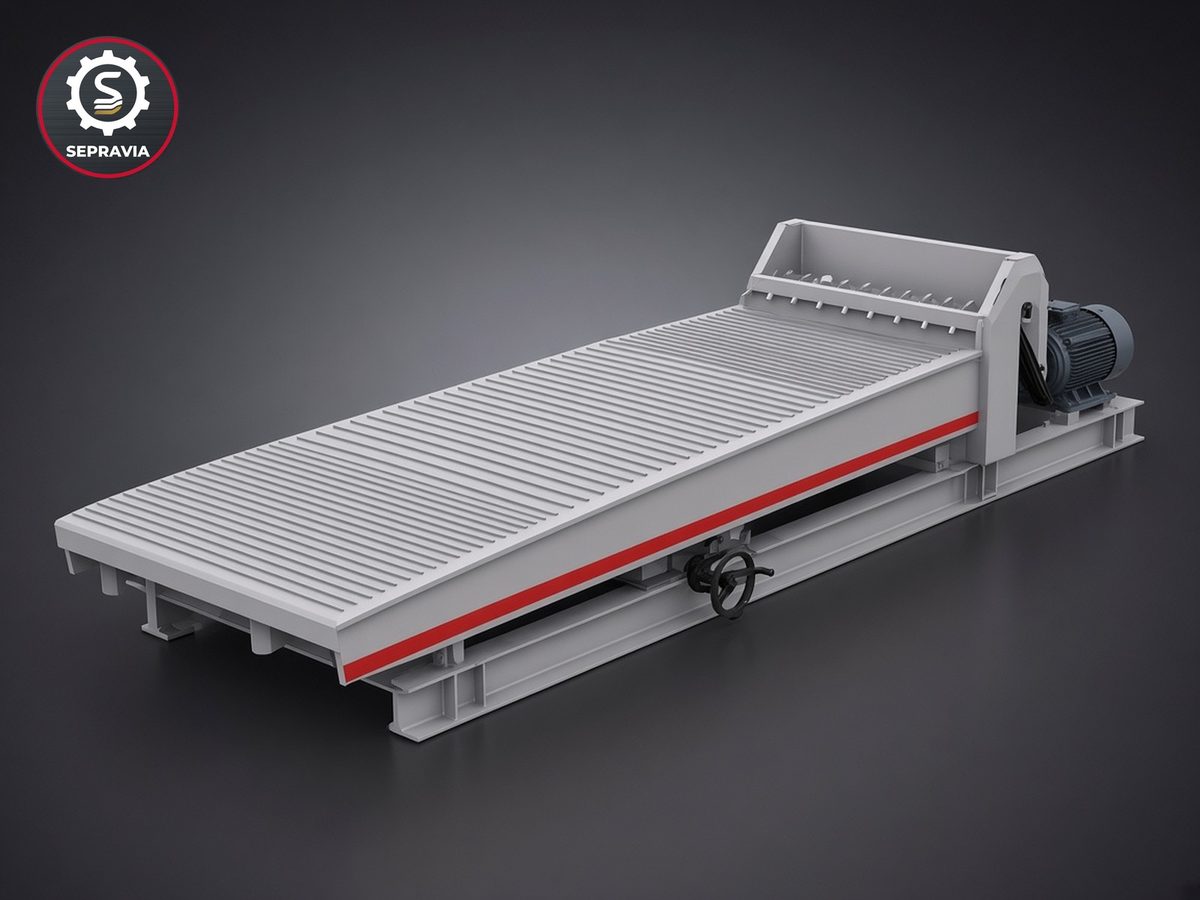
6-S Shaking Table
Fine-particle cleaning by density for tin, tungsten, gold and tantalum-niobium.
Capacity 0.05–1.5 t/hCentrifugal force for better fine-gold recovery
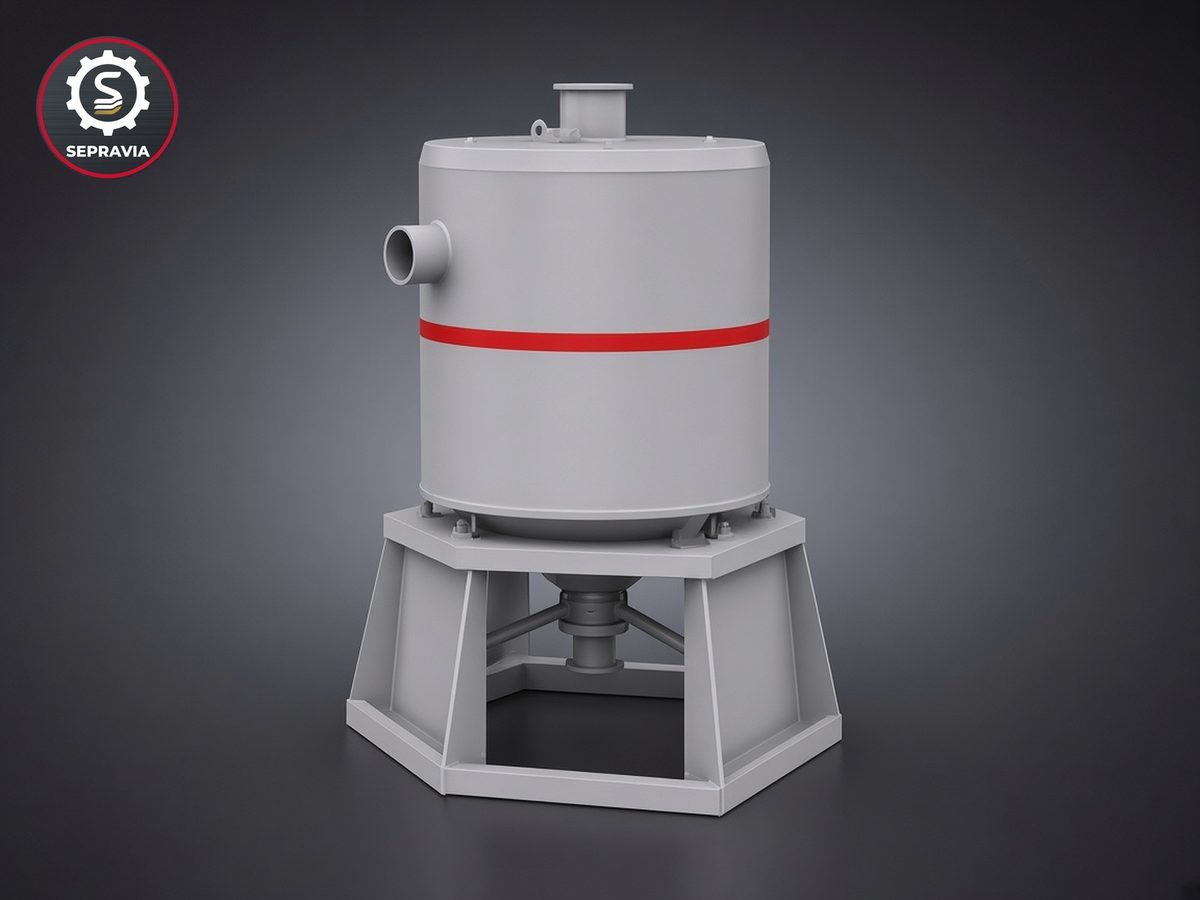
The STLB centrifugal concentrator amplifies the gravity difference between particles with centrifugal force, separating heavy from light particles. It is well suited to recovering fine gold and fine heavy minerals.
| Parameter | STLB20 | STLB30 | STLB60 | STLB80 | STLB100 |
|---|---|---|---|---|---|
| Capacity (t/h) | 0–0.6 | 2–3 | 8–12 | 40–45 | 60–80 |
| Fluidising water (m³/h) | 2–3 | 3–5 | 7–10 | 30–36 | 50–60 |
| Slurry water (m³/h) | 1.5–4 | 5–7 | 8–12 | 40–45 | 60–80 |
| Feed density (% solids) | 0–50 | 0–50 | 0–50 | 0–50 | 0–50 |
| Feed size (mm) | 0–3 | 0–3 | 0–5 | 0–5 | 0–6 |
| Concentrate flush cycle | Hard-rock gold every 1–3 h; placer gold every 2–6 h (all models) | ||||
| Concentrate per flush (kg) | 2 | 3–5 | 10–20 | 40–50 | 70–80 |
| Power (kW) | 0.75 | 1.5 | 4 | 11 | 18.5 |
| Weight (kg) | 205 | 380 | 1100 | 2300 | 3700 |
Data from the product catalogue; may be adjusted to the ore. Final figures are confirmed in the quotation.
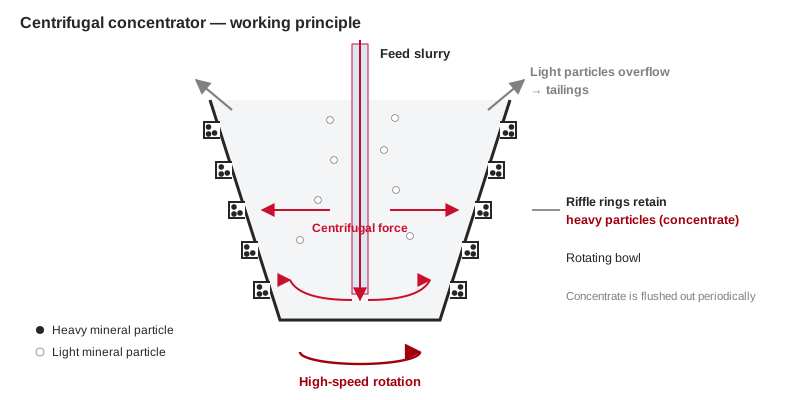
Slurry enters at the bottom of the rotating cone and centrifugal force throws particles against the riffled wall. Gold and other heavy particles stay in the riffles while fluidising water keeps the bed loose and light particles are carried up and out. At the end of each cycle the concentrate is flushed out.
Fine-particle cleaning by density for tin, tungsten, gold and tantalum-niobium.
Capacity 0.05–1.5 t/h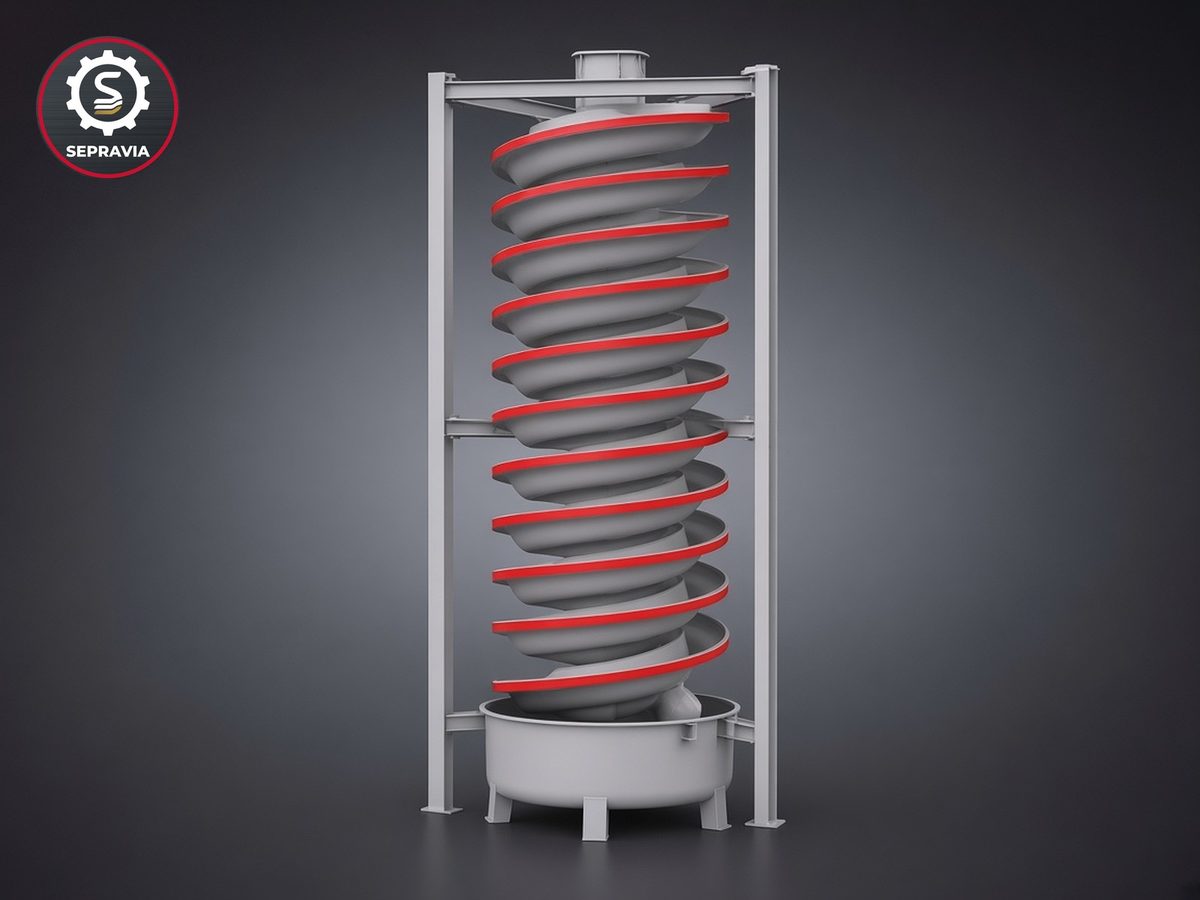
Unpowered fine gravity separation for mineral sands, iron, chrome, tin and tungsten.
Capacity 0.15–10 t/h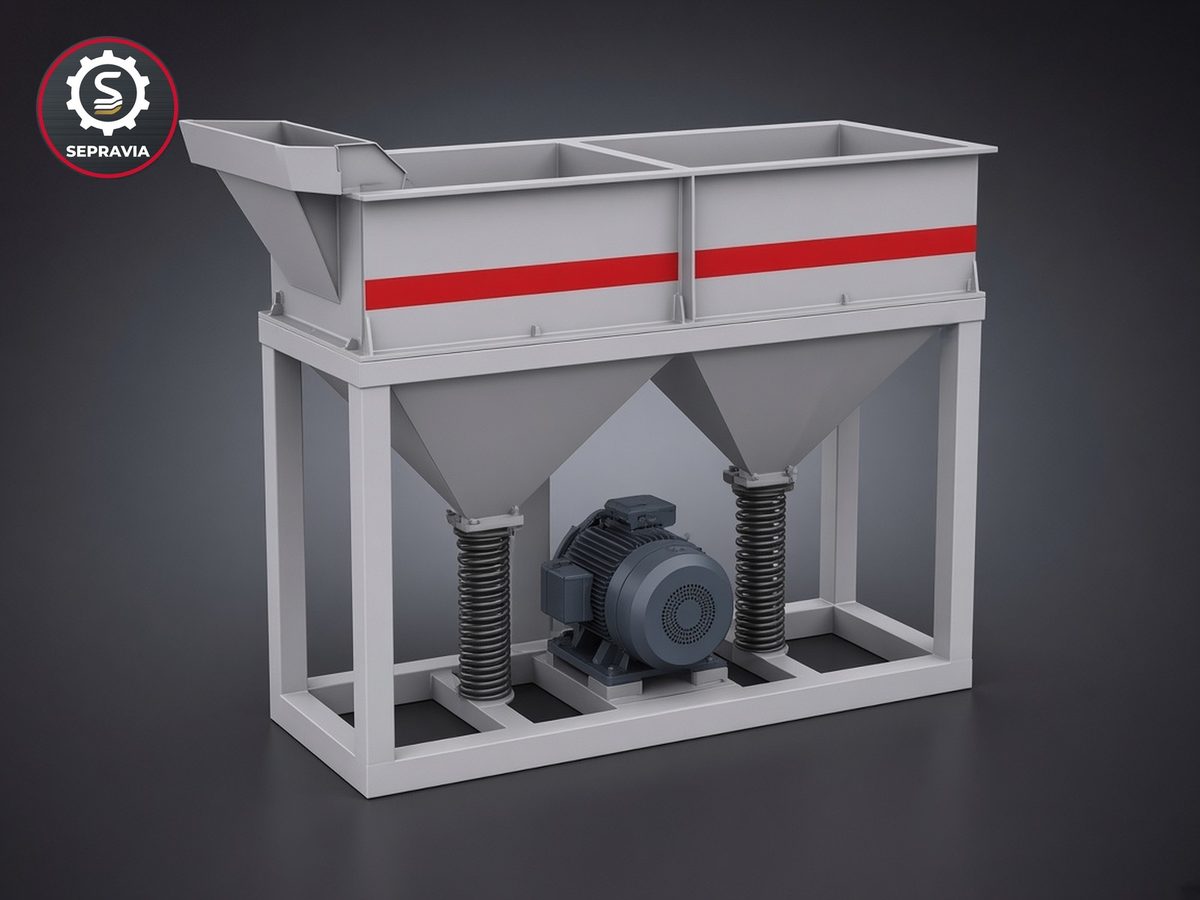
Roughing of coarser heavy minerals; common for placer gold, alluvial tin and tungsten.
Capacity 1.5–25 t/hOur engineers recommend a flowsheet and equipment set based on your ore.