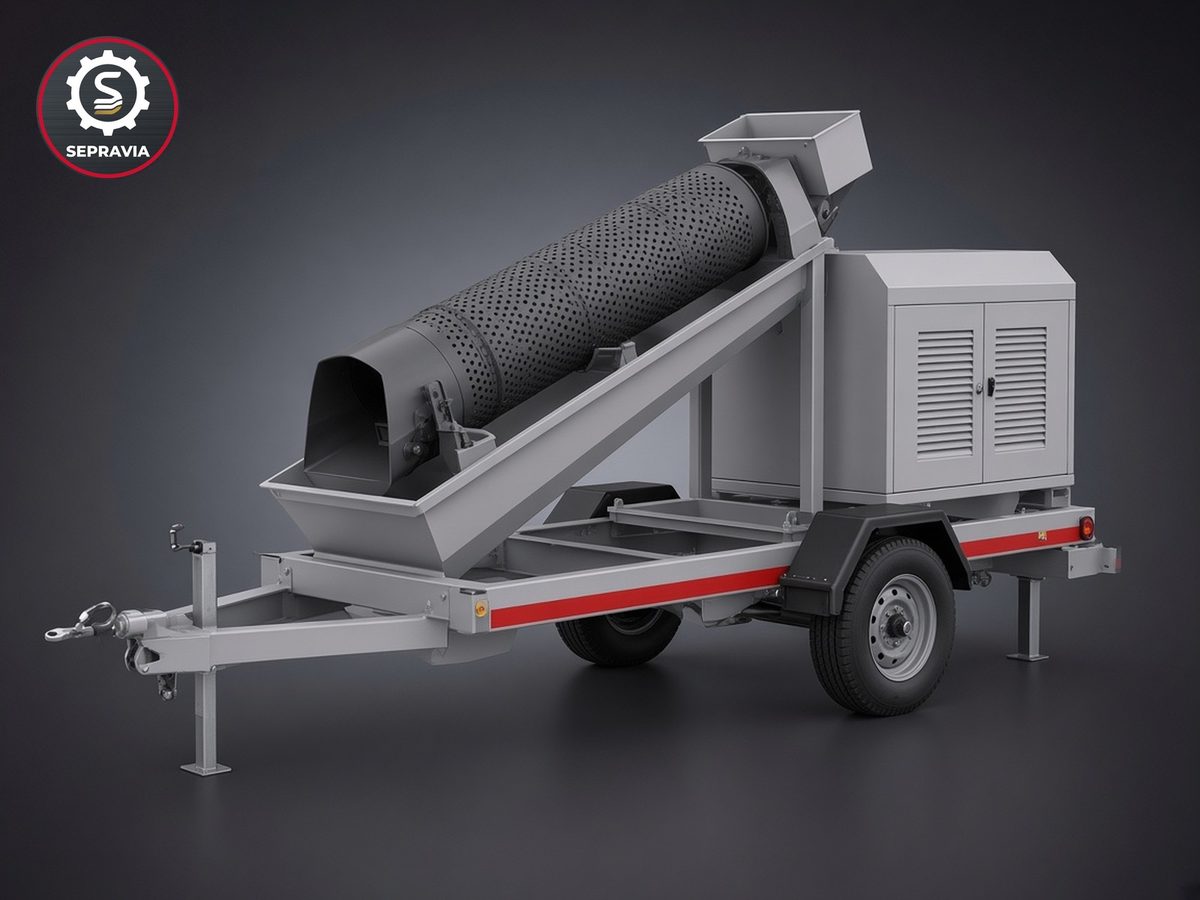
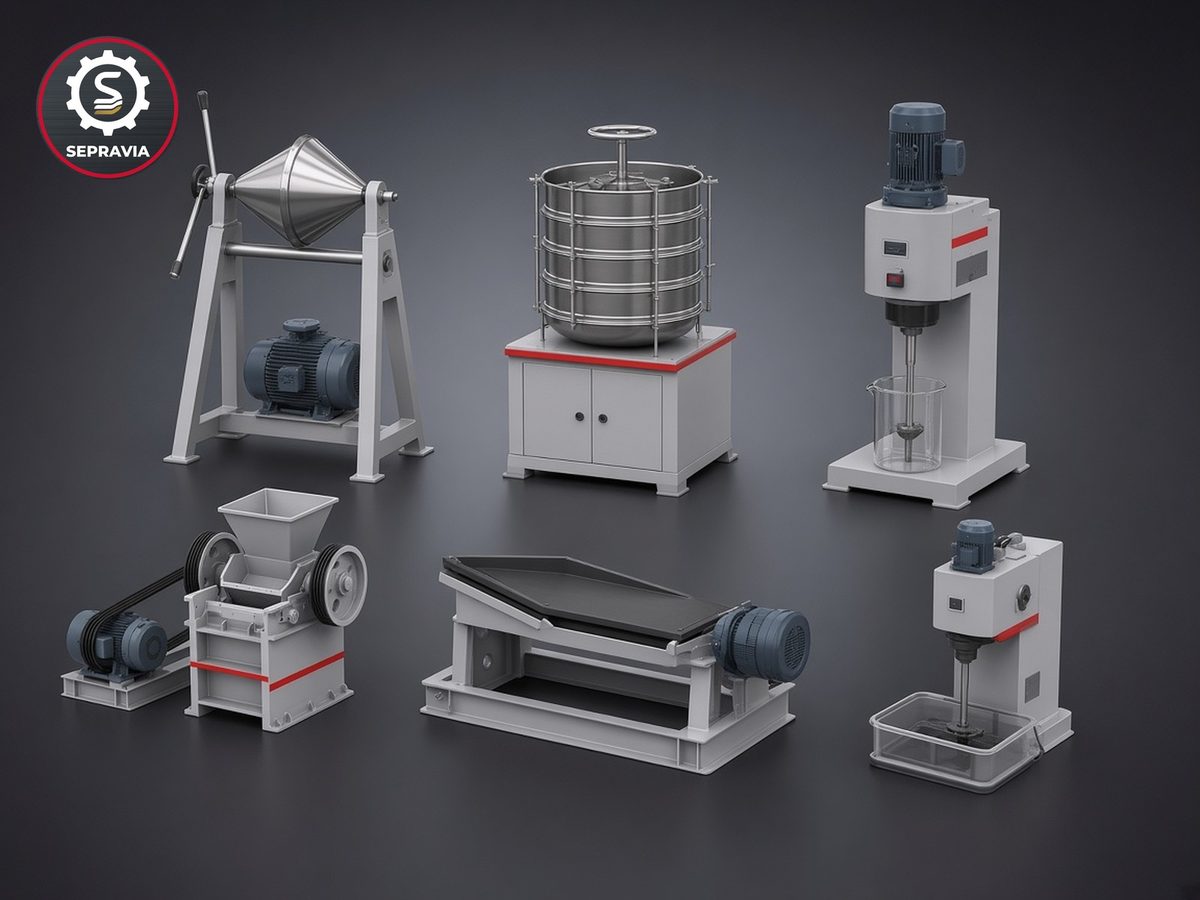
The main tin mineral is cassiterite (SnO₂). At about 6.8–7.1 g/cm³ it is far denser than quartz at about 2.65 g/cm³, so gravity separation is the backbone of tin processing. Cassiterite is also brittle: it breaks into slimes easily during crushing and grinding, and very fine cassiterite is hard to recover by gravity. Hence the old rule of tin dressing — recover it as early as you can, reject waste as early as you can — taking liberated cassiterite out early, discarding liberated gangue early and avoiding overgrinding.
Tin deposits fall into two broad groups. In alluvial tin the cassiterite is largely liberated already, so the flowsheet is mostly washing, desliming and gravity separation, much like placer gold — the Bangka-Belitung area of Indonesia is a well-known example. Hard-rock (lode) tin has to be crushed and ground, and the cassiterite often occurs with sulfides such as pyrite, arsenopyrite and chalcopyrite, and with wolframite or magnetite, which makes the flowsheet more involved. The sections below describe the full hard-rock route; for alluvial tin, the crushing and grinding stages can be left out.
Typical flowsheet
- 01CrushingJaw crusher + fine crushing
- 02Stage grindingRod mill / ball mill↳ Middlings back to regrind
- 03ClassificationDesliming cone + hydraulic classifier↳ Slimes → slime circuit
- 04RoughingJig (coarse), spirals (medium–fine)↳ Tailings → checked, discarded
- 05Table cleaningCoarse-sand, fine-sand, slime decks
- 06UpgradingSulfide flotation, magnetic separation↳ Sulfides / iron minerals
- 07Tin concentrateDewatering, drying
1. Crushing and stage grinding
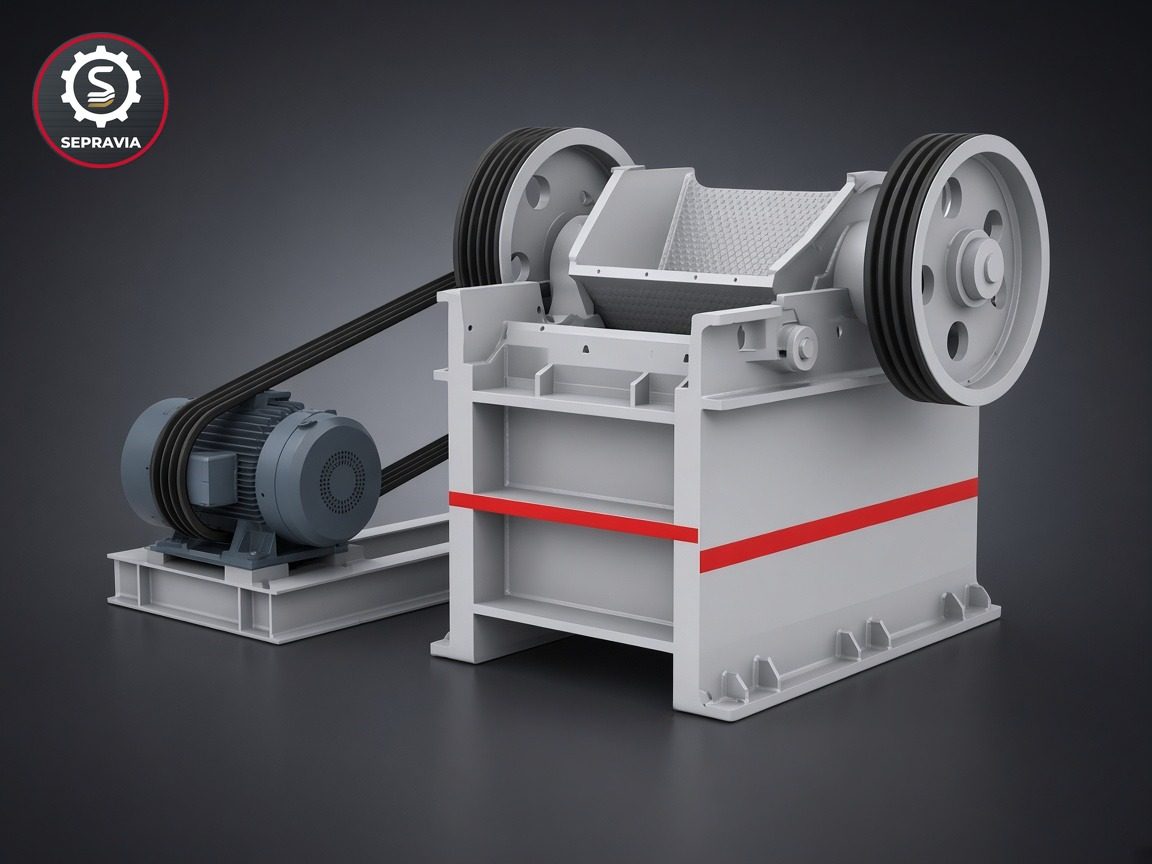
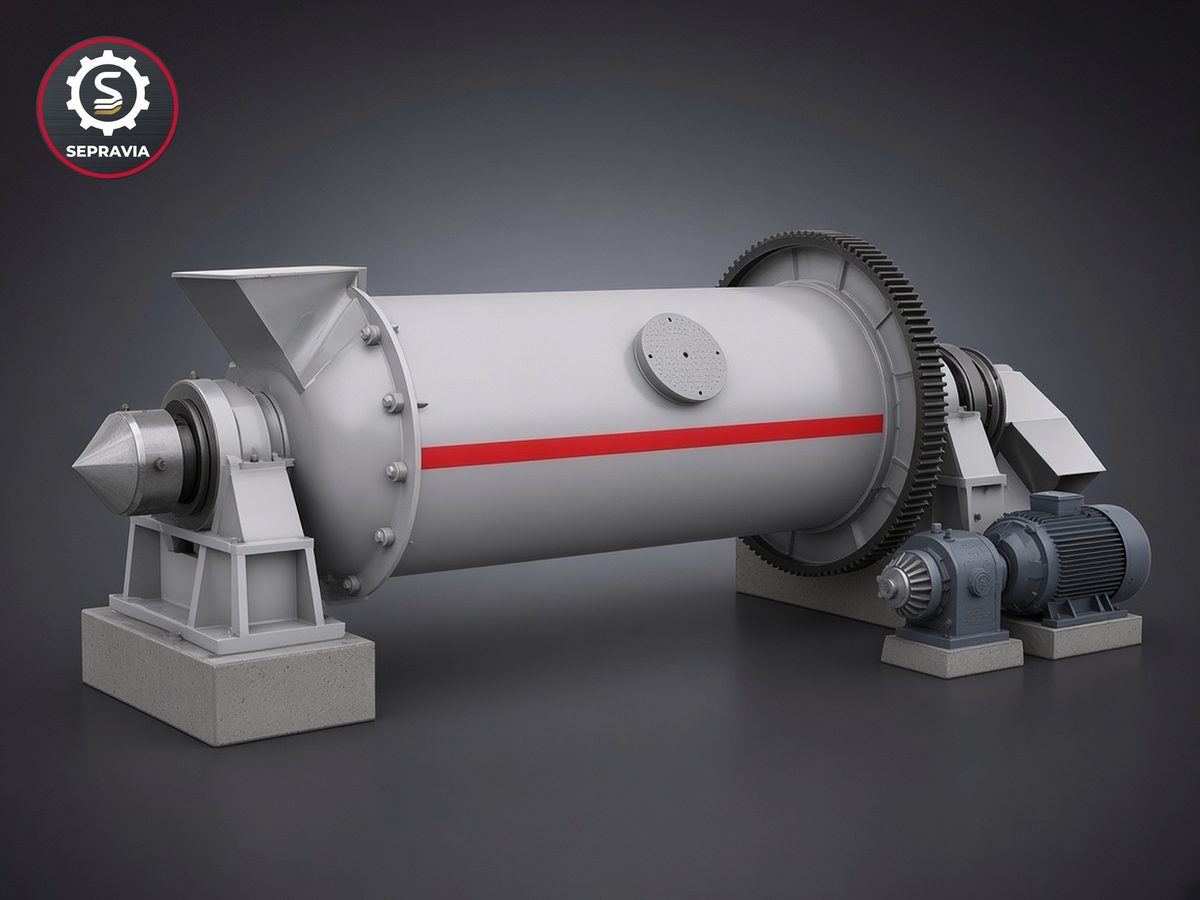
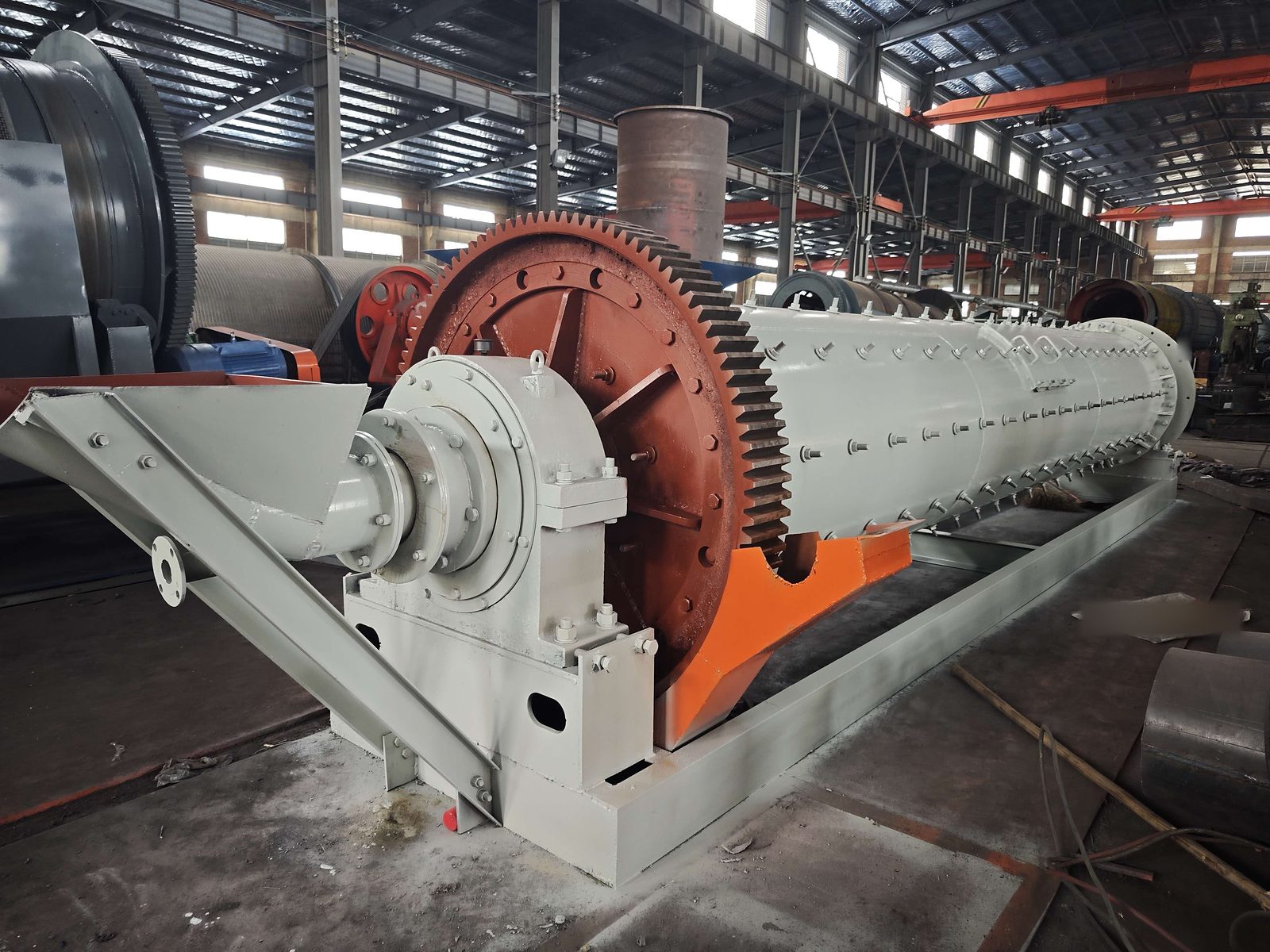
Crushing is normally done in two or three stages to a size suitable for the mill. Unlike many flotation plants that grind everything fine in one go, tin plants usually grind and separate in stages: the first stage grinds only to a fairly coarse size, jigs and tables take out the liberated coarse cassiterite, and the unliberated composite particles are reground as middlings and treated again. This noticeably reduces overgrinding of the cassiterite.
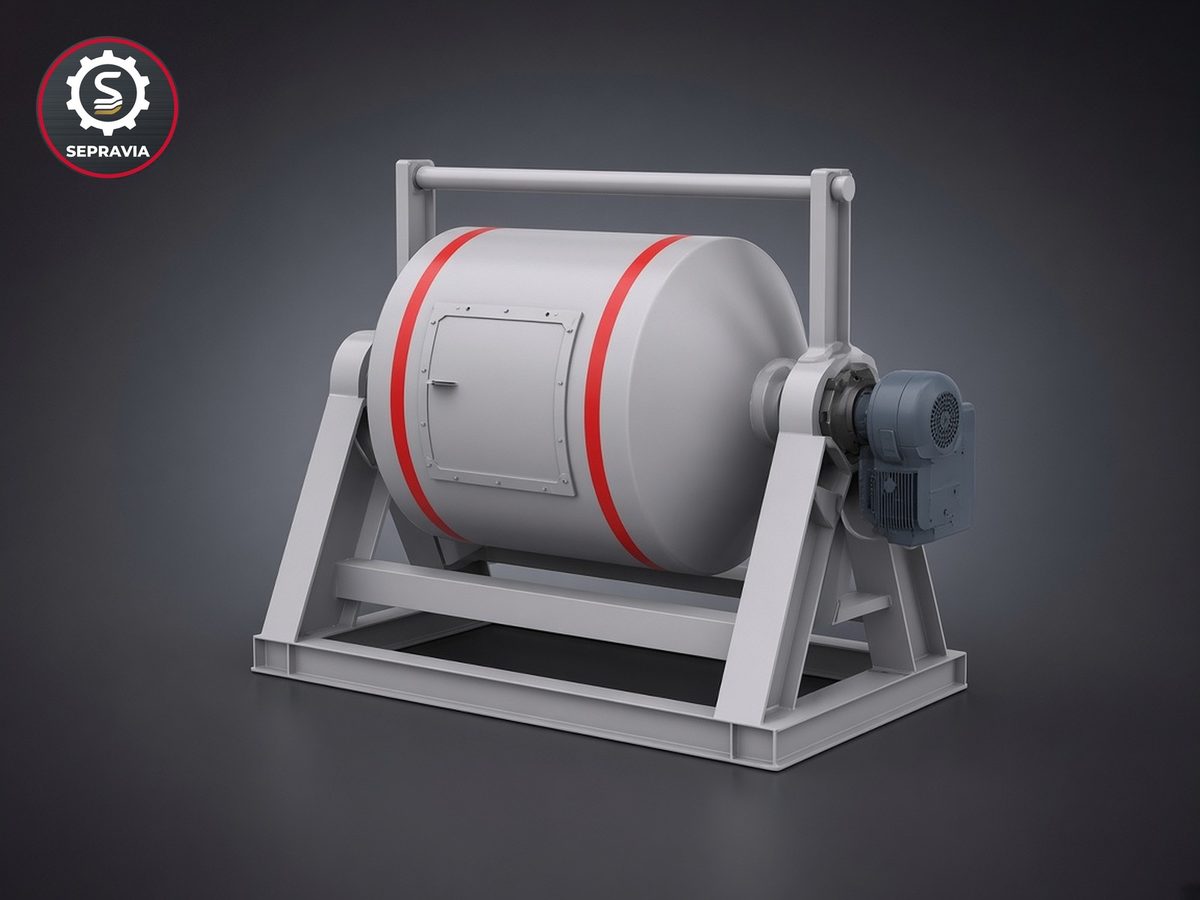
A rod mill breaks ore by line contact, giving a more even product with less overgrinding, so it is often used for primary grinding; ball mills are typically used for regrinding middlings. Each mill runs in closed circuit with a classifier so that particles leave the mill as soon as they are fine enough.
2. Classification: a narrow size range for every machine
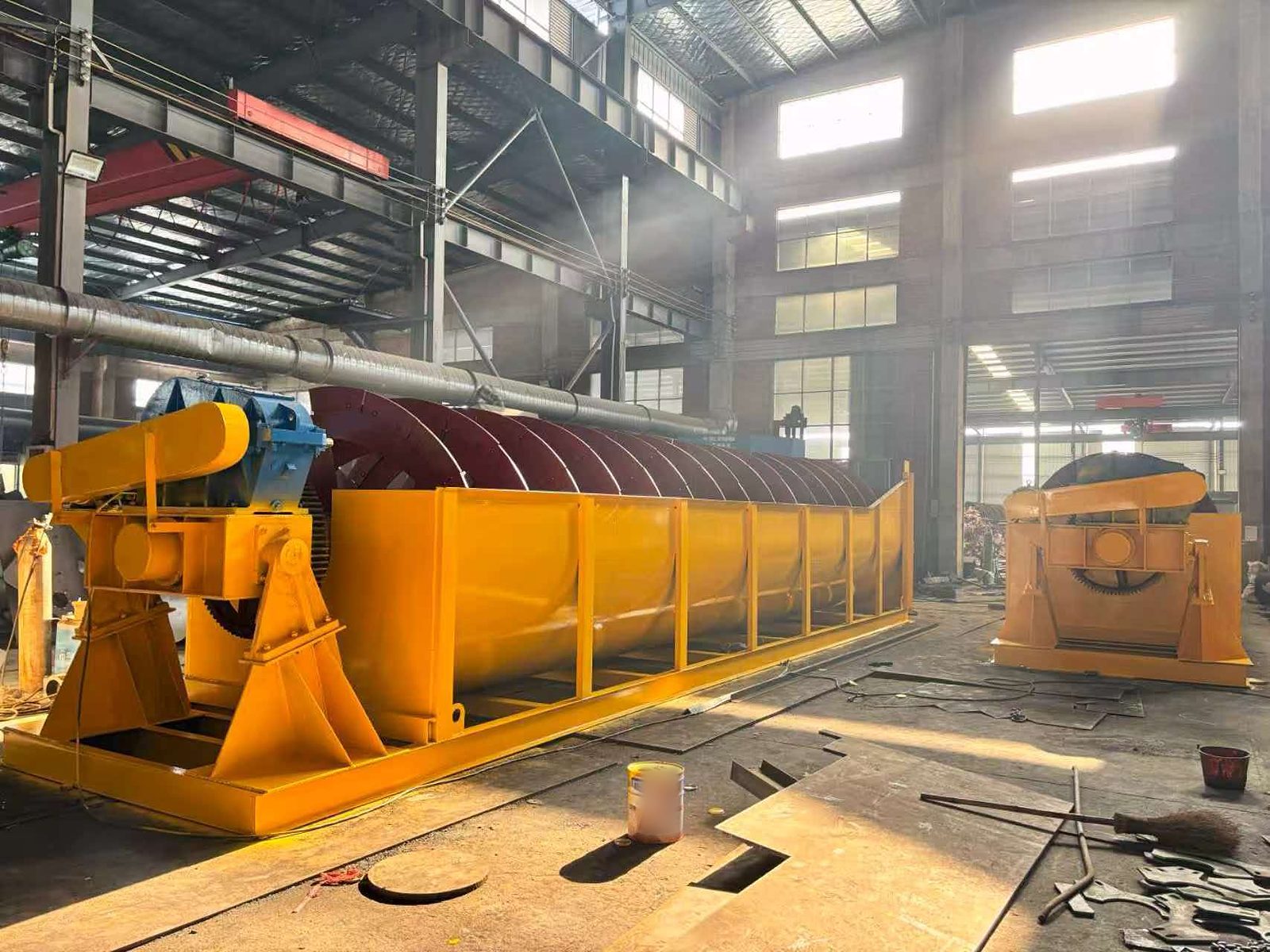
Shaking tables and other gravity machines are sensitive to the feed size range: the narrower the range, the sharper the separation. Tin gravity plants therefore usually remove part of the slimes with a desliming cone or cyclones first, then split the material into several size fractions in a multi-spigot hydraulic classifier. Each fraction goes to its own machines and decks: the coarser ones to jigs and coarse-sand tables, the medium and fine ones to spirals and fine-sand tables, and the finest to the slime circuit.
| Size fraction (typical) | Common equipment | Notes |
|---|---|---|
| Coarse, above about 1–2 mm | Jig | Takes out liberated coarse cassiterite early; tailings can be reground |
| About 0.074–2 mm | Spiral roughing + coarse/fine-sand table cleaning | The main recovery range for gravity |
| About 0.037–0.074 mm | Slime tables, centrifugal concentrators | Recovery becomes noticeably harder |
| Below about 0.037 mm | Centrifuges, flotation where justified | Difficult by gravity — the key is to generate less of it |
Size limits vary with the ore and should be set by testwork.
3. Roughing with jigs and spirals
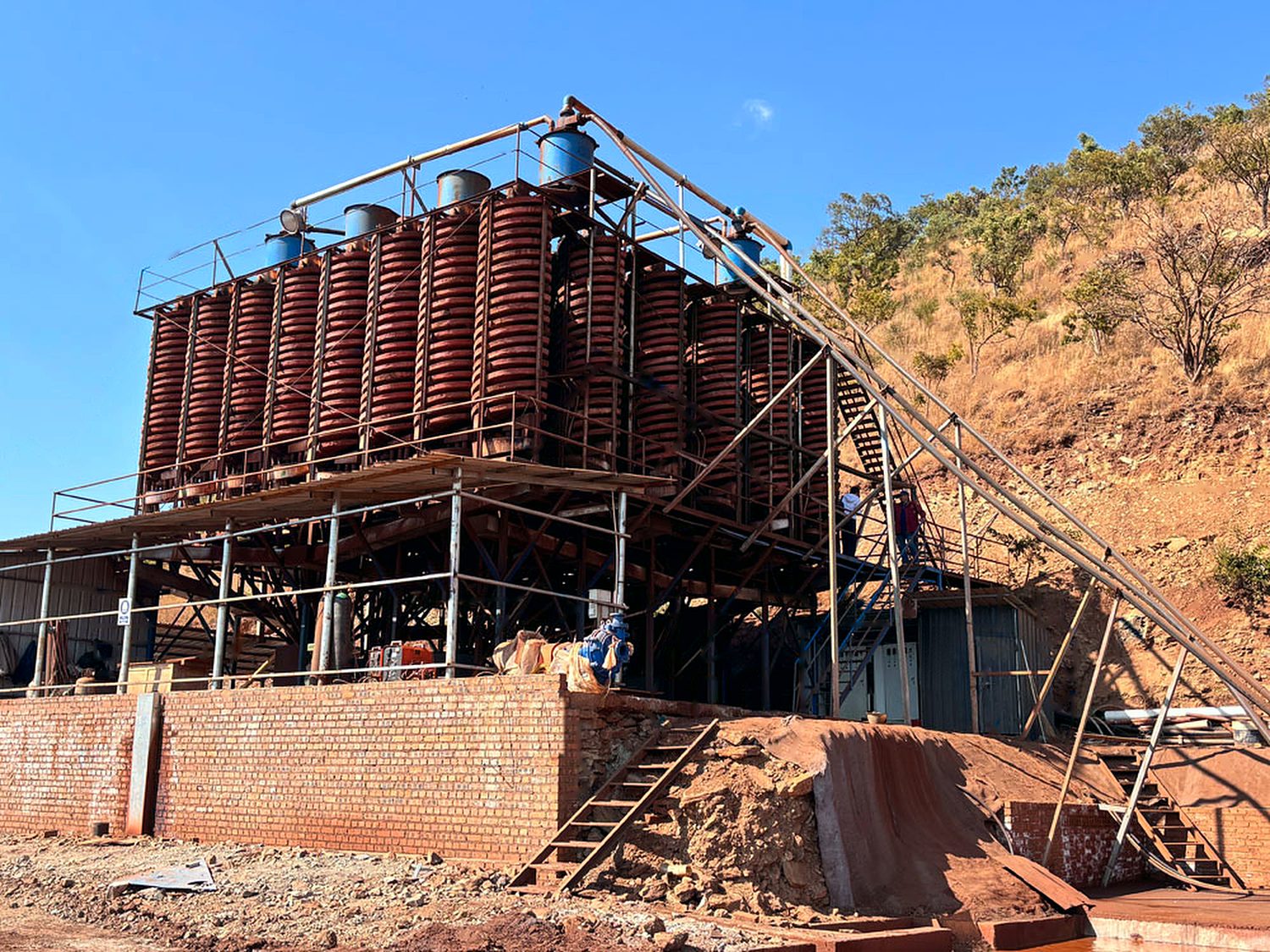
Jigs handle the coarser fractions and take out liberated coarse cassiterite at the front of the plant, which reduces the tonnage that has to be ground further. Spiral chutes need no power, take little floor space and handle large tonnages, making them a good choice for roughing and rejecting tailings in the medium and fine fractions — they greatly cut the load going to the tables. The rougher concentrates from both then go to the tables for cleaning.
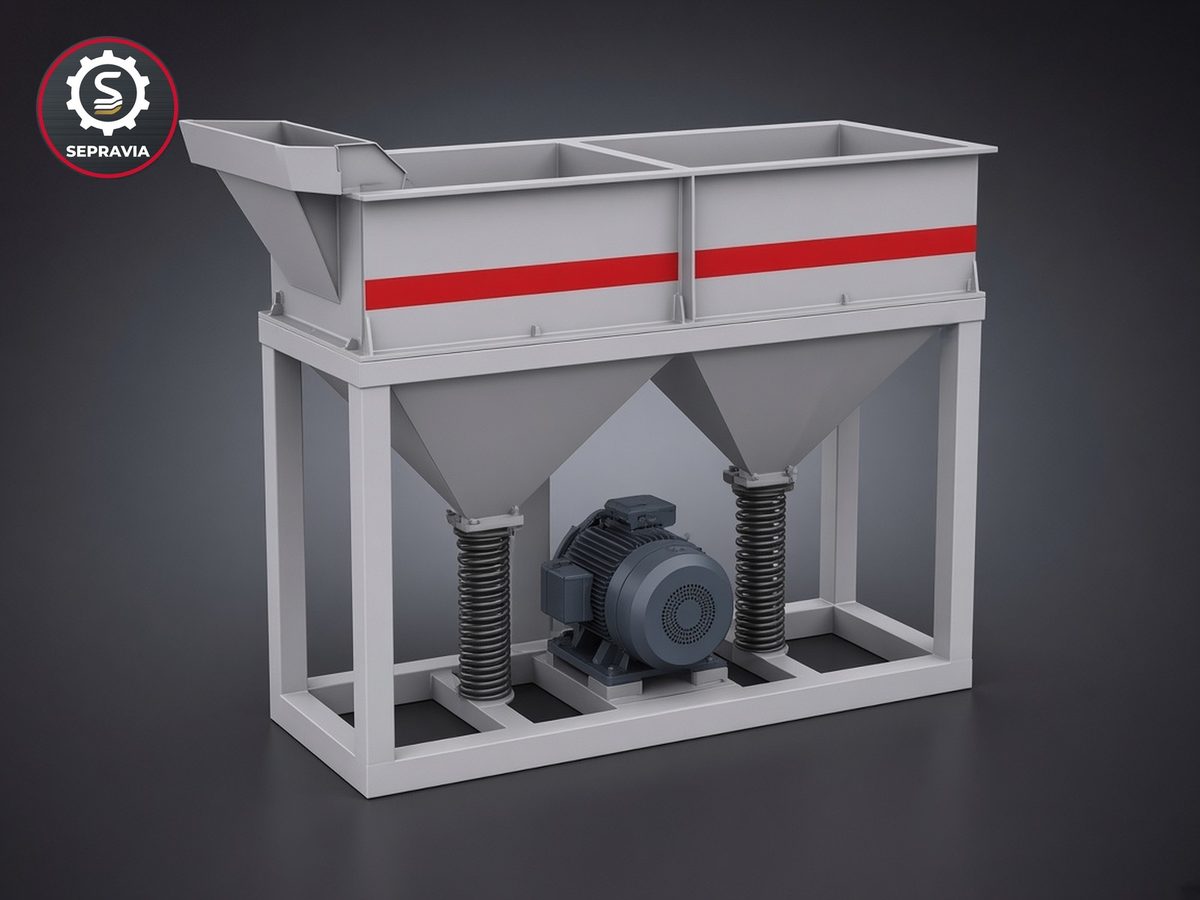 Sawtooth-Wave JigView equipment →
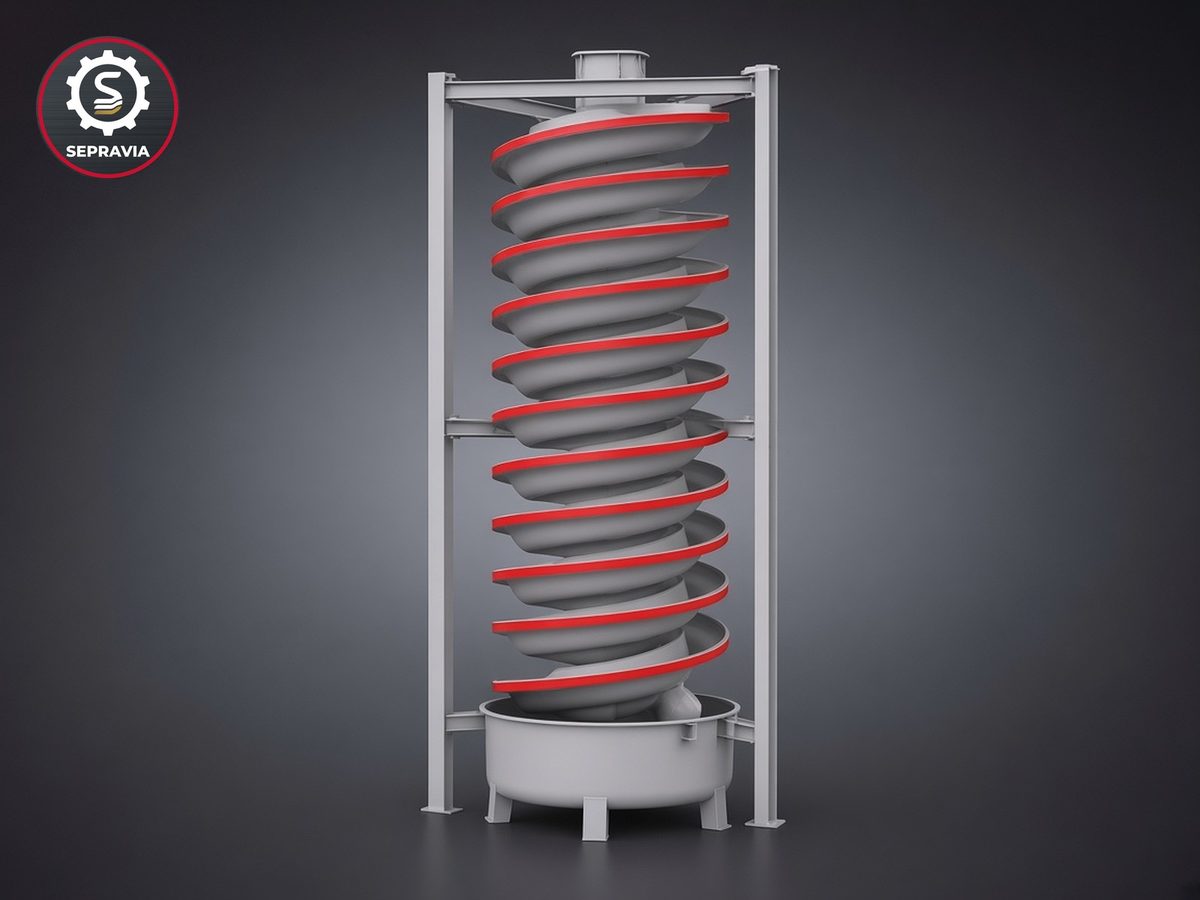 FRP Spiral ChuteView equipment →
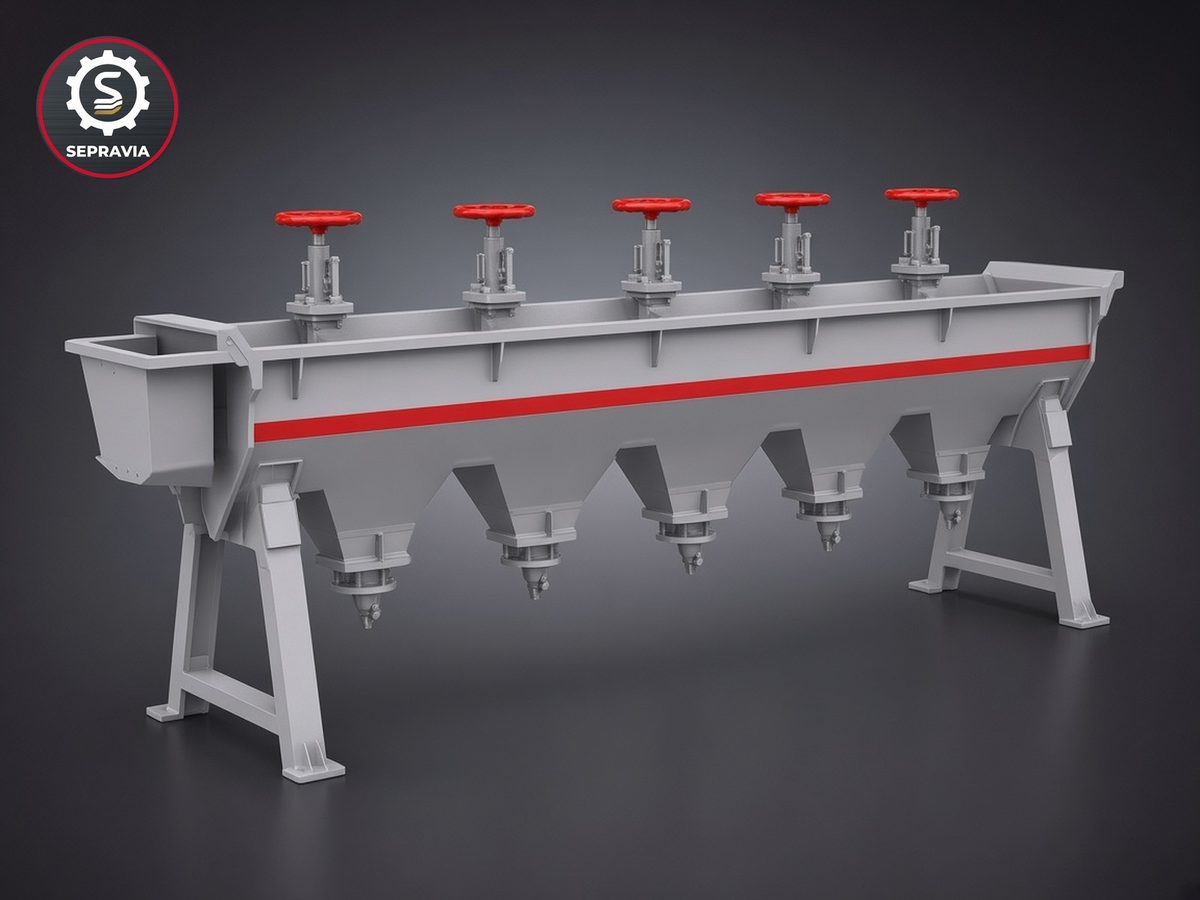 Hydraulic ClassifierView equipment →
4. Cleaning on shaking tables
The shaking table is the heart of a tin gravity plant. Each size fraction should go to the matching deck — coarse-sand, fine-sand and slime decks differ in riffle pattern, stroke and speed. A table produces concentrate, middlings and tailings at the same time: the concentrate goes on to upgrading, the middlings go back for regrinding or retreatment, and the tailings are checked and discarded. Tin plants often run a fairly large number of tables in groups by size fraction, so that every unit works under the right conditions. For setting tables up, see How a Shaking Table Works and How to Adjust It.
5. Treating the slimes
However carefully grinding is controlled, some cassiterite always ends up in the slimes. The slime circuit usually thickens and classifies this material first, then recovers it on centrifugal concentrators or slime tables. For even finer cassiterite, dedicated cassiterite flotation is an option, but the reagent scheme is complex and must be worked out by testwork. Tin lost in the slimes is often the biggest weakness in a plant's overall recovery, so it deserves its own attention at the design stage.
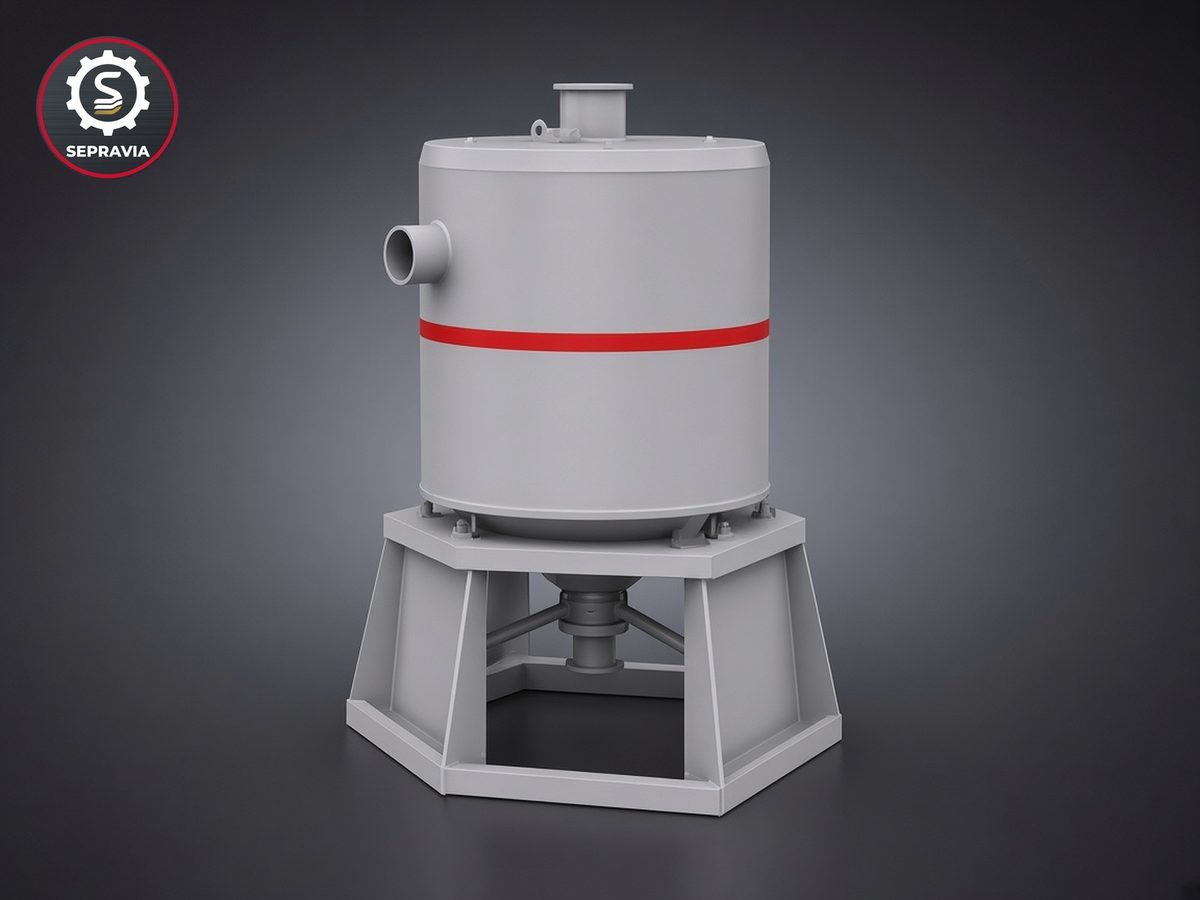 Centrifugal ConcentratorView equipment →
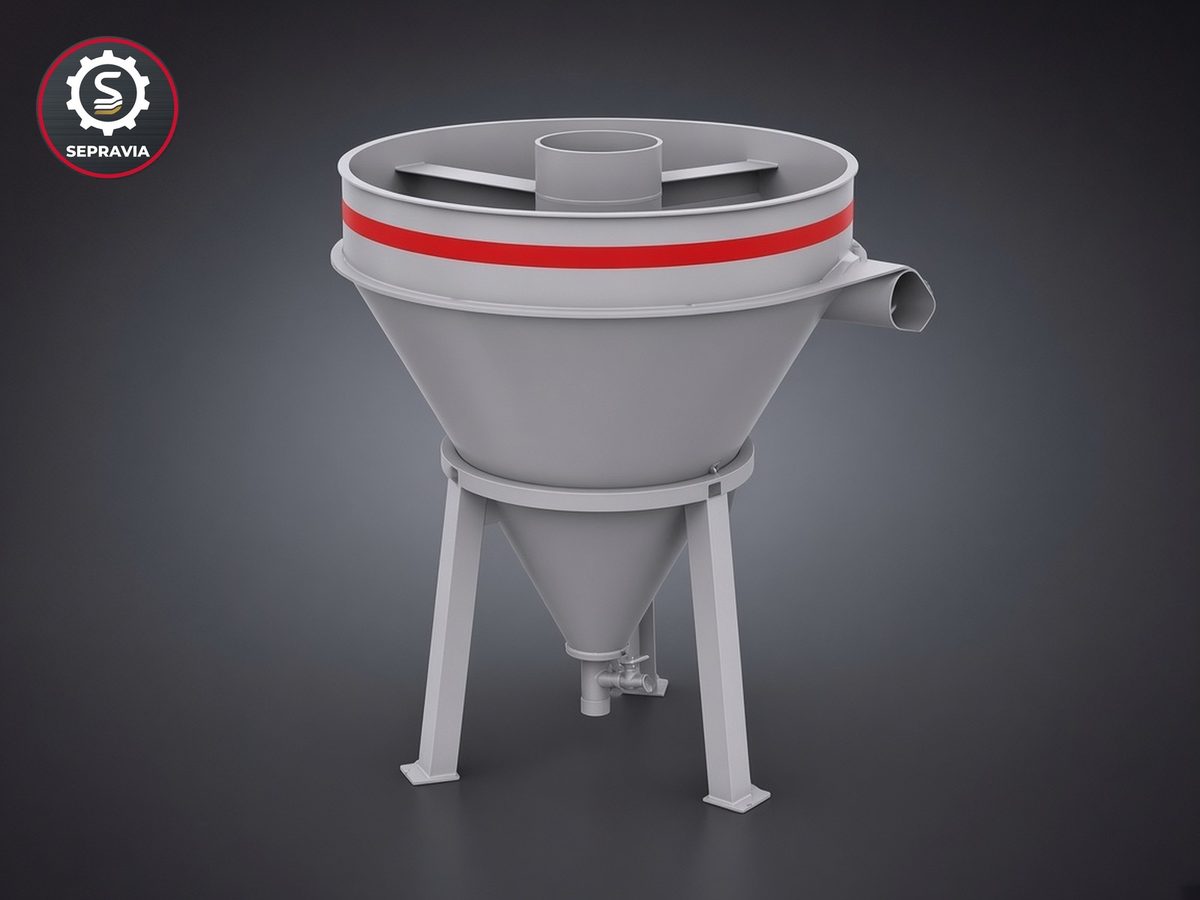 Desliming ConeView equipment →
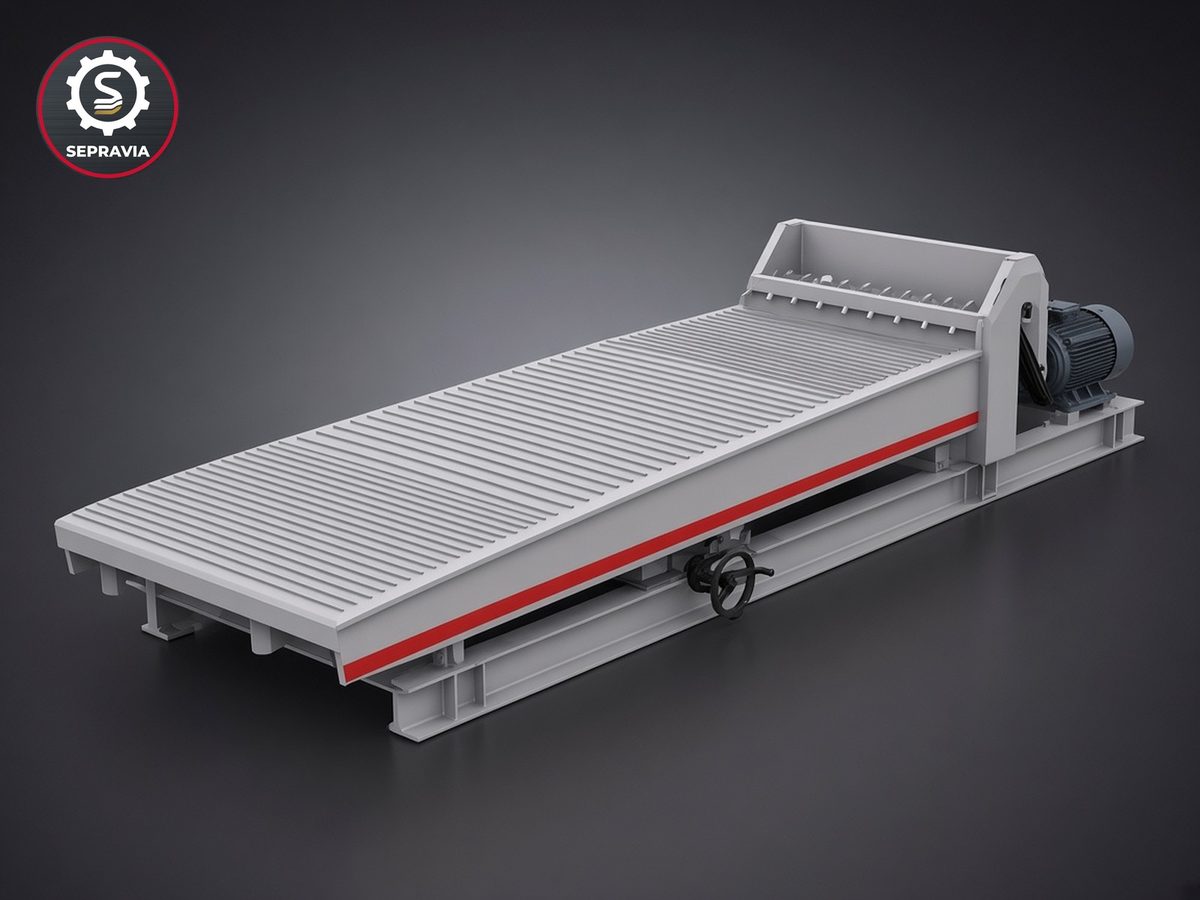 6-S Shaking TableView equipment →
6. Upgrading: removing sulfides and iron minerals
Gravity tin concentrate often carries sulfides such as pyrite and arsenopyrite. With densities of roughly 4.1–6.1 g/cm³ they are close enough to cassiterite that tables alone cannot remove them completely, and sulfur and arsenic hurt concentrate quality and saleability. The usual remedies are:
- Sulfide flotation — sulfides are floated off with xanthate-type collectors while the cassiterite stays in the cell product.
- Magnetic separation — magnetite is removed with low-intensity magnets; weakly magnetic minerals such as wolframite and ilmenite can be separated with high-intensity magnets and, where worthwhile, sold as by-products.
- Other methods — alluvial tin concentrates often contain zircon and monazite, which may call for electrostatic separation or similar steps.
The final upgrading circuit depends on what the rougher concentrate actually contains, so a mineralogical analysis of the concentrate at the design stage is well worth doing.
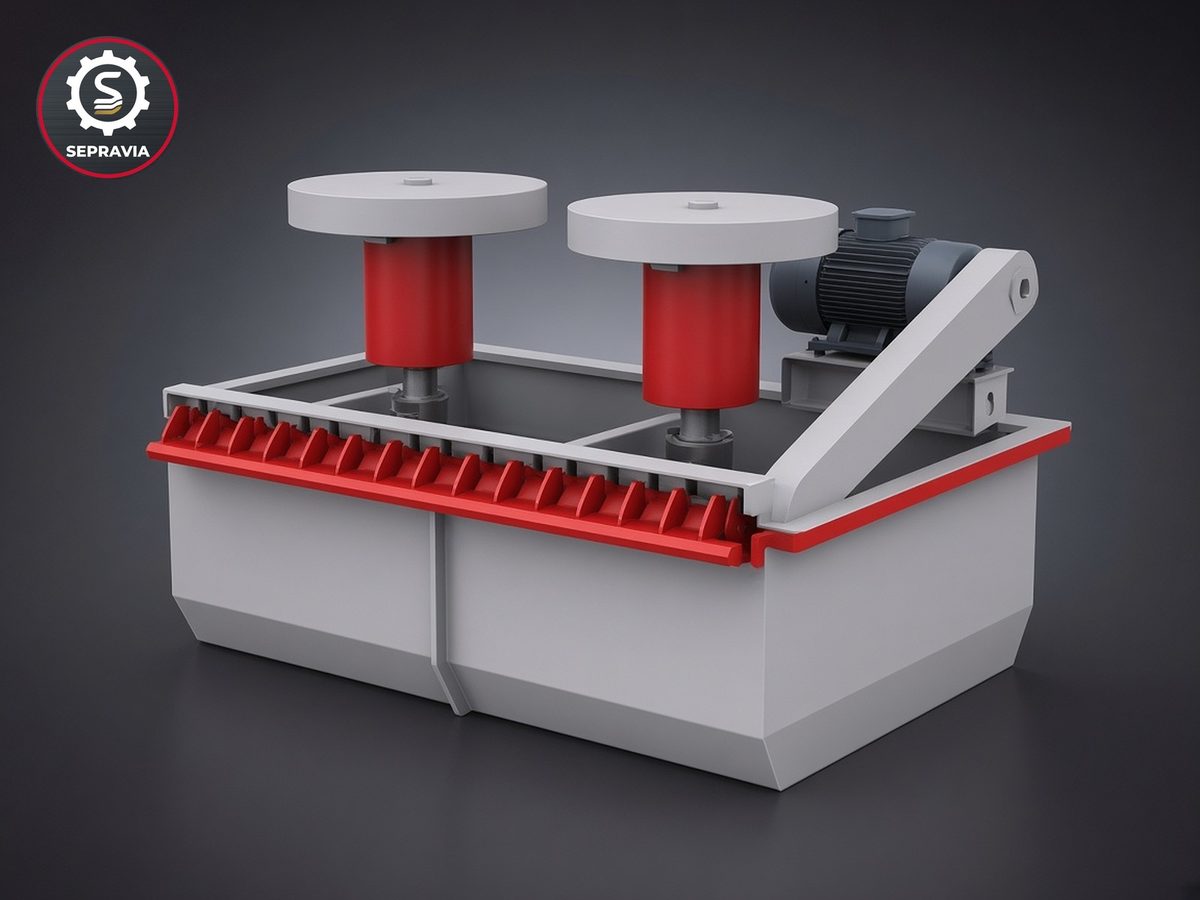 Flotation MachineView equipment →
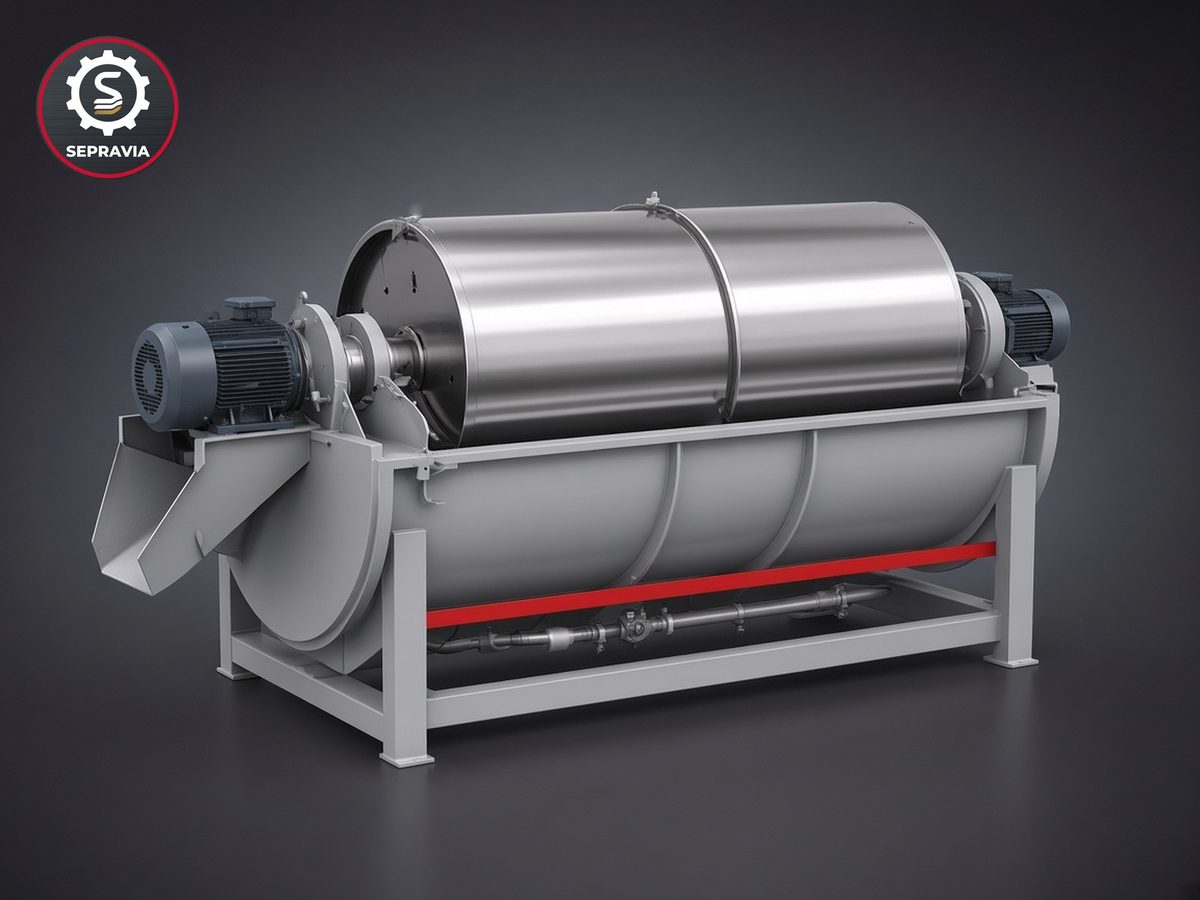 Wet Drum Magnetic SeparatorView equipment →
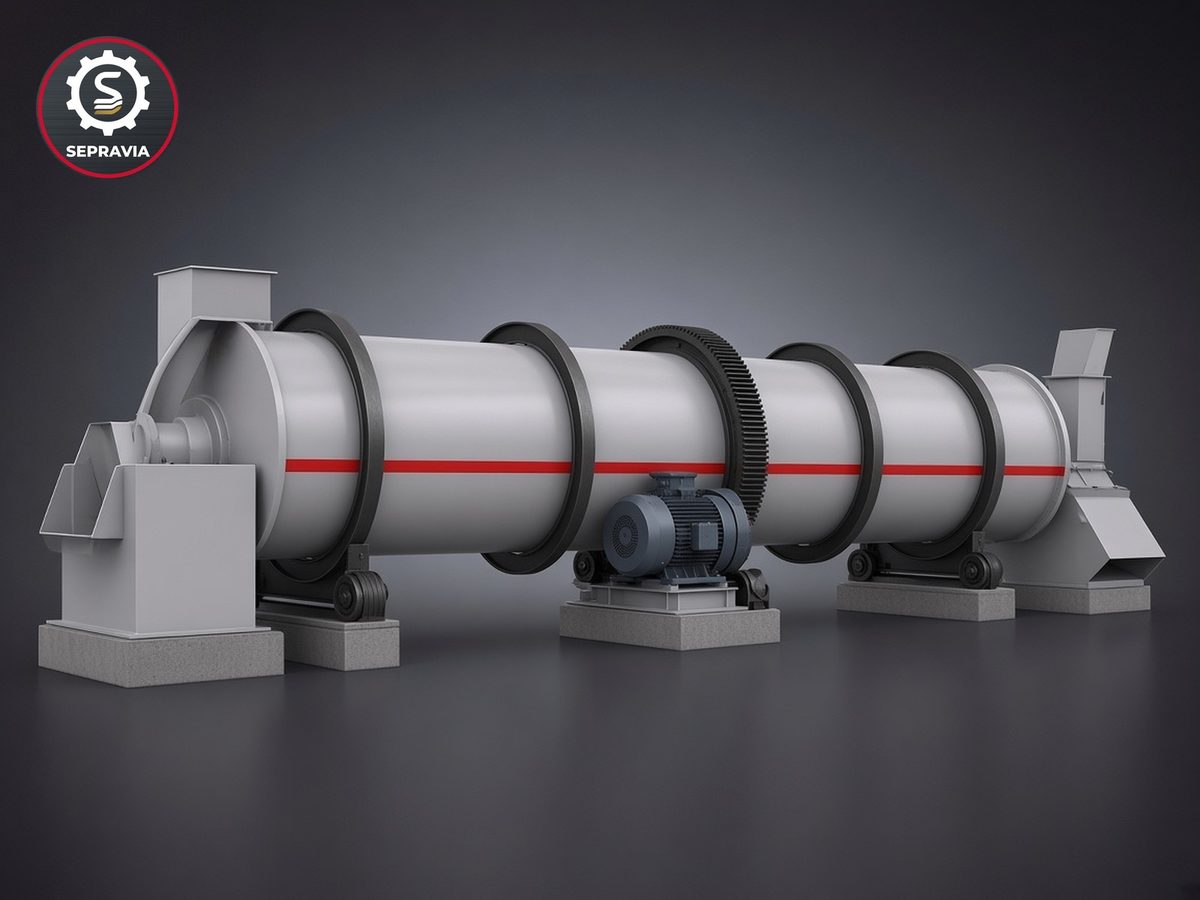 Rotary DryerView equipment →
FAQ
Can tin ore simply be floated?
Cassiterite flotation is mainly used for the fine fractions. Coarse and medium fractions are still best treated by gravity, which costs less and needs no complex reagent scheme.
How different are alluvial and hard-rock tin flowsheets?
Alluvial tin usually needs no crushing or grinding — washing, desliming, jigs, spirals and tables do most of the work. Hard-rock tin needs stage grinding and usually an upgrading step to remove sulfides and iron minerals.
Need a flowsheet and equipment advice for your ore?
Tell us the ore type, feed size, planned capacity and site conditions, and our engineers will recommend a flowsheet and equipment and send a quotation.
Comments
Questions or experience to share? Comments appear after review.
No comments yet — be the first.
Sign in to comment
Used only to verify you; your email is never shown.